
Dragons mood board:
Dragons have book present in a range of different cultures for thousands of years, many people have questioned how different cultures came up with such similar creatures in myths without contact, some believe it’s because people from different cultures came across dinosaur bones and created the mythical creatures.
Dragons have since been apart of stories and media from all over the world, they have been portrayed in a huge range of media with a range of portrayals, in some media like BBC’s “Merlin” (2008) Dragons are portrayed as wise, intelligent creatures like Kilgharrah. In some media like HBO’s “Game of thrones” (2011) Dragons are portrayed as something that is destructive and something to be feared.
In my case I am going for a protective and wise dragon so design wise this will need to be reflected with a soft and gentle design which is also grand. While a lot of the dragons in the mood board are quite large and grand some of them tend to be a little smaller. The idea I have is a large dragon that can protect the forest so I feel like I will lean towards the larger dragons because of this.
I feel that if I focus on the images of the larger dragons I can get clear image of what I can put in my dragon’s designs. The characteristics include things like long, defined jaws and noses, horns and big wings are characteristics I would like to look into for my dragon design. Rich colours seem to be used a lot in dragons which I feel will work in my favour
The smaller dragon designs wouldn’t really work on the design I want to achieve. All of these images will help me due to the diverse range of dragons I can use for inspiration, which will help create a unique product.
Wildlife animals mood board:
The smaller creatures in my project will be based on real life woodland creatures, the creatures will be based on woodland creatures only, this may include dears, bears, hedgehogs, rabbits, foxes and birds. These animals are good at looking innocent and cute which will help with the order of the peaceful forest. Something I said in my idea is that all of the creatures will be designed so that they are built from flowers, leaves and twigs.
A lot of the creatures like hedgehogs, birds and rabbits can all be layered up with natural items in a believable way with the fur, feathers, spikes, ears and other body types. Like I said in my proposal “Viva Pinata” comes to mind with how I can layer it all up (Only it will be with leaves, grass, flowers and mushrooms). This will be really interesting to do with all of the fur, body parts and feathers these creatures may have, I will be able accomplish unique shape, colour and structure in the designs.
The images here will act as great reference for my wood land creatures in my project anatomy and characteristic wise to create accurate woodland creatures that are recognisable. Many of these creatures need to be drawn with reference to be accurate visually and so that I can figure out where all the leaves and flowers will sit properly. I am happy with this mood board and I feel that it will really help me.
Tree creature mood board:
The tree creatures are the destructive force (Chaos), I would like to give them a darker and a little more aggressive look wise to go against the dragon and the forest creatures. I want to give the tree creatures some human features but I would like to keep them tree based. I can tell this may be a challenge design wise since I don’t want them to look incredibly human, of course they’ll have some features like noses, limbs made from branches, eyes and maybe some facial hair made from leaves. It’s the body structure I’m a little worried about. I want them to look threatening but still be made from natural forms.
Like I said on my leaf mood board I am exploring different types of leaves, as well as creature and environment design, this will help me create diverse and unique designs for the tree creatures with the colours and shapes in the leaves and bark. I’m happy a lot of the research is transferable over to the other areas of work I will be doing since it’s really convenient.
When I look into the mood board it does make me realise there is lots for me to do design wise. Will they have legs? What will their arms be like? What kings of faces will they have? There is a lot for me to explore with the tree creatures. I would really like them to be distinct face wise, I talked about this a bit in my initial primary research when looking at “The art of Brave” and about how I need to avoid same face syndrome. The mood board shows a range of ways faces have been implemented into the designs. Some have their faces molded into the bark with noses being twigs or lumps formed in the bark. A few of the trees have facial hair made from leaves which I think is a really nice idea and it can bring in a lot of character visually. I could use different coloured leaves to create a range of moods and create individuality in the designs which is something I would really like to achieve here.
Leaves mood board:
Leaves are obviously a big part of the project, they make up the creatures and the environment they are in. I really need to create a range of diversity in the shapes in the creatures and environment so I am looking into different types of leaves to do this. This can include different colours in the leaves or different shapes and types. It may seem really hard to do this but with primary and secondary research it is doable. It makes me really interested to see what I can do with something that seems so simple and insignificant.
While the season will be within the Spring/Summer period with lots of greens it may be possible for me to sneak in a few leaves with different hues to break up the greens a little (flowers will also help out with breaking up all of the greens). Leaves can also be combined with berries and flowers in trees, bushes and on the creatures, the structure of branches and how leaves, flowers and berries grow from them is something I will need to look into for my ideas generation to see how it could work in the scene.
As well as this mood board I also had a look at leaves for primary research so I could gain an understanding of ho they grow. Leaves often group together on branches which is something I will need to look into so that my trees don’t look bare. I could look into layering leaves onto trees in my ideas generation to give me an idea on how I can achieve this. I can use this images here as reference for leaves and branches for the environment and work from here.
Flowers mood board:
Flowers are another big part of the designs and to me they are one of the defining traits of what will be the creature designs colour and shape wise. There is a huge range of flowers to experiment with in the designs to give off different feelings and looks in the characters. There is a range of flowers to use, something I need to consider is whether or not the flowers will match one another in the location and feelings they give off, so that way they all look like they belong together in the same project. The colours I am most drawn to flower wise are blues, pinks, purples, yellows and whites, although I would like to try out other colours too!
As well as all of this flowers grow in a range of ways, whether that be from trees, bushes or the ground. A lot of the time flowers tend to grow in groups and there are often patches of the same type of flowers together, the are rarely on their own in the sense so when I am doing thumb nail sketches and colour ideas for my environment I will need to consider this.
For my ideas generation and final production I am going to keep referring back to these images so I can create accurate flowers, a lot of these flowers are really unique in their overall shape and I would really like to achieve this in my art work. I also did some primary research on flowers too, I gathered some photos when I was out of some wild flowers and flowers in a florist. They all had unique features that could really look nice in my project and can be stylised to look like they have come from their own location.
Trees and bark research:
A big element of the creature designs (the tree creatures, some of the woodland creatures and maybe the dragon) and the environment is of course the trees! Because of how diverse trees can be shape wise I have a huge amount to experiment with shape and design wise. Trees can have leaves, flowers and mushrooms growing from them so this is something that can be used to create colour and shape diversity in my designs. Things like bark colour and patterns will need to be considered to create a unique range of trees for the environmnet and creature design.
Understanding how trees work in the sense of how the branches go off and how leaves grow and sit on the branches is really important to make the trees look natural and nice. I said in my proposal that I would really like to have more detail and texture in my environment piece, this applies to everything in the scene, including the bark and trees.
A lot can be taken from this board about the structure of trees and how they form, this is something I have struggled a lot with in the past in my artwork, it’s really important that I get the form right in my art work by referring back to this mood board. I want lifelike trees that aren’t aggressive (That’s for my tree creatures), a lot of trees are drawn as rather aggressive and sharp (Like those trees you get in spooky forests) which isn’t what I am interested in for my project. The big and full trees are the ones I would like to use in my project.
Forest mood board:
This may seem like a general mood board (in a way it is) but I created this forest board for my environment piece; It is important for me to understand what forests can look like and how they can be laid out in illustration pieces. This will act as inspiration and will help give me a general idea and boast when working on environment thumbnails, something I find very helpful in art.
Something I have been thinking about is the lighting, will it get darker as you go further into the scene or will it go lighter? Light can be used to create dramatic effects in a scene and will draw attention to certain areas in a scene like the distance or the foreground. It’s something I will need to plan out in greyscale to understand what would work best. Things like light effects will need to be considered (When light travels through tree leaves it’s in limited amounts) and the light may be tinted from the colour of the leaves also. I think I prefer the forests with warmer lighting since they are a lot more inviting visually whereas the forests with cooler lighting aren’t very inviting and seem a little eerie in a way. Because of this I think my forest will lean more towards warmer lighting in the colour ideas.
Things like trees, leaves, flowers, mushrooms and rocks are all layered up on top of eachother to create the sceneand are all assets I’ll need to look into with my ideas generation.
Tutorials to help with project:
To help me with techniques on digital painting I have collected a range of tutorials on painting in photoshop that I think will help me. This includes brushes, shading, blocking out, painting scales, animals, leaves and rocks. I may need help that I haven’t collected on this board so in the project I may have to go and look some more if I become stuck. I feel like I won’t struggle a huge amount with painting the new themes.
It may seem irrelenvant to have this moodboard here however I feel that it would really help to have these tutorials on hand to help me with things like shading, lighting, brushes and and techniques to help me create the best product I can. The tutorials are broken down into steps for me to follow and all of the tutorials here apply to me as well, I plan to follow these by the steps however the brushes I use along with some techniques may very to make sure that I still achieve the actual style I would like for my project.
As well as this I also plan to look into my own artbooks for tutorials and advice (more on that in primary research) to help me out during the project if I struggle art wise.
Primary research:
Along with secondary research, primary research was done as well for a deeper understanding of plants and dragons. As well as this I did some art tests and techniques using the tutorials from pinterest to see how they would work in action.
I decided to do a quick test of a bush tutorial I got from pinterest, I feel that I made the bush way too graphic and shiny here, it was a little too bubbly but I’m happy that I tried out the first tutorial, I think I should have picked a different tutorial that matches my style and what I want to achieve but I think this was good experience. During my project I’ll use the other tutorials like this but the ones that match what I need to do.

I looked into my art fundamentals book that I got from Christmas, I still haven’t gone through this whole book since it has so much content art wise. Like the title says it has a huge range of art fundamentals with break downs of the techniques. It has sections for light and colour, depth and perspective, anatomy and composition, all these topics apply to my art work in one way or another, whether that’s my creature design or environment design.

Newell, J. and Hargreaves, J. (n.d.). Art fundamentals.
The book itself is structured in an easy to understand way similar to the tutorials in my mood board, the difference is that the book explains how and why to do the certain steps, I find with a lot of image based step by step tutorials (Like the one I used for the bush test) just don’t tell you how to do the step, they just tell you visually how to do it which I don’t find incredibly helpful if I’m being honest. This book is just so much more clearer with the way it presents it’s tutorials.
Things like tonal values, light and colour will really apply to both my creature and environment design to create nicely balanced, clear and calming pieces of work (Perspective applies to my environment). This is a really good book for me to refer back to due to the tutorial being so simple but detailed at the same time, I will be using it throughout my project whenever I need it for help with my work.
To research and look into plants I went to Brighton with a friend who also needed primary research (but for ancient Egypt). I went around the Pavilion gardens for my research, taking photos of leaves, trees and flowers. The flowers all fit in with the forest theme, they appear as delicate here and would be great in the background! I think for my creature designs I may need to look into some bigger and bolder flowers?
I did actually head off to a flower and plant shop in the lanes, sadly they had mostly succulents on display that day but they still had a few flowers I could look at, they had tulips, daffodils and carnations. These are some of the flowers that could be used in creature design.
As well as this I took some photos of flowers in my Mum’s valentines bouquet as some of the flowers are huge. I don’t know whether they’ll fit the theme but I thought it would be good to look at them just incase.


Leaves are another natural item I will be using in my design, they come in a range of shapes and colours like clover shapes, tear drops, circles and diamonds. They can be layered up on the design for a fur and scale effect in the designs, with colour diversity to break up the design.
The lanes are known to have really unique stores, I actually found some clothing stores that also sold plants (sadly they were very expensive so I couldn’t get a souvenir), but I took some photos of the greenery for inspiration, a lot of the plants seem too tropical for my theme so I won’t be able to use these for reference. I think colour wise this could help me however.
Another place I went to was Sheffield park for primary research, we went there to walk one of my dogs but I thought it would be a really good opportunity to get photos of wild flowers and other plants I wouldn’t have found in Brighton.
The park had a range of things like trees, flowers and even water features. I’ve split them up into different slides here so that it is easier to see and understand.
This slide show is for the flowers I found in the park, it was quite early in the season so not all of the flowers came out, the few that did come out however were fully bloomed and were really pretty. I was able to get some really pretty photos that show the full structure of the petals. They all seem to layer up and form the shape of the flower in a simple way that does seem to appear as complex from an art point of view. I personally think these kinds of flowers would really work in my creature designs compared to the ones that are from Brighton since these ones growing in the wild are a lot more natural and I think they fit the theme of the forest a little more. I will be referring back to these images in my creature design since I think these flowers would look a lot nicer and natural compared to the flowers in the shop.
Something that I was really surprised to see was lakes with really nice water features or these mini kind of water falls that were formed from rocks, currently I don’t know if I would want water in my scene but I took photos regardless since the scenery was so nice! The rocks themselves build up and formed areas water could splash and move through which I thought was really interesting. Like I said I don’t know if there will be water in my scene but these images will help me incase I go down this route in my environment design. The images really help me understand the structure of the water features so if I do add water to the scene it will really help me out here.
As well as this I wanted to look into how Dragons are portrayed in media, media in general has become a lot more diverse in general and I feel like the same has happened with dragons. I looked into a range of films, tv and games.
European dragons have been portrayed in stories for hundreds of years in European mythology. Originally stories consisted of warriors slaying dragons who were feared huge amounts by people, they were often used as obstacles in stories. They had a negative representation in the start.

Dragons remained apart of entertainment media, they stuck around in the very beginning of what could be considered modern literature and the start of the digital age (TV, films etc). J.R.R Tolkin used dragons in the Lord of the Rings book series (1937), the dragons were portrayed a cunning, intelligent, greedy over gold and treasure, strong and had magical powers. Some of these traits have been carried over but can be dated to older media. Walt Disney’s “Sleeping Beauty” (1959) features a dragon as an obstacle. With how long dragons have been around this could be considered a modern interpretation of a dragon.
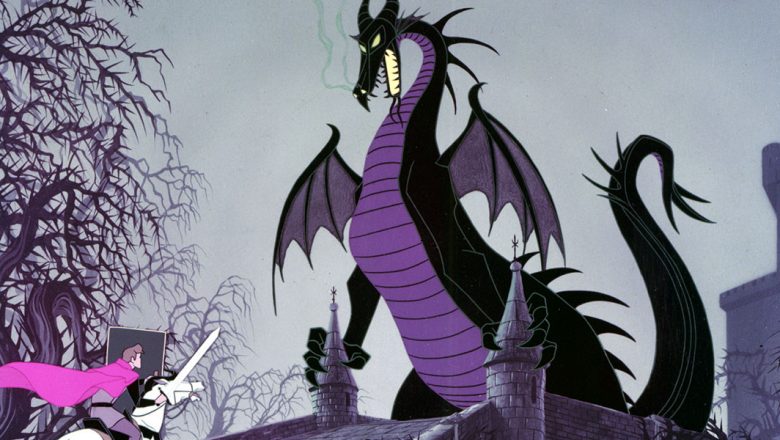
Dragons are still being used today in media. The “how to train your dragon” film and book series paints dragons in a positive light and as something that should be protected. Dragons in general are being presented in a more positive light now. The “Spyro” game series features a dragon as a protagonist, Spyro doesn’t have the typical personality as a dragon in traditional media: He is very small, his allegiance is good and he isn’t aggressive like the typical dragon. He’s a child friendly gaming mascot who is incredibly recognisable in media. There are also other dragons in the series that are portrayed as wise and also good. I’ve played through Eurocom’s and Travellers Tales game “A hero’s tail” (2004) and all of the dragons have been given distinctive personalities that don’t trap them in stereotypical dragon territory.
One of the most popular representations of dragons in recent years is Dreamwork’s film series “How to train your dragon”. They are portrayed in the typical way first, as a nuisance and something to be feared. Later on in the films they are something to be celebrated and protected, they all have unique features and personalities and can be seen as a new movement of dragons in media. “How to train your dragon” is one of dreamwork’s most popular franchises and has become a massive influence on the publics perception of dragons.

Whenever I walk into the children’s section of WaterStones I always see picture books about dragons, the dragons are always portrayed as cute and friendly. An example is this book I’ve been seeing a lot lately: “When a dragon comes to stay”, it is a cute interpretation or dragons which is aimed towards young children. The uses of dragons has shifted loads over the last few years and it does show me I can portray dragons in a good light for my project!

Hart, C. and Beardshaw, R. (n.d.). When a dragon comes to stay. Nosy Crow inc.
It may seem irrelevant for me to have looked into all of this dragon media and the way it has grown over time but I feel that it’s important for me to understand the most important element of my project from a historical and contextual point of view to see what I may need to do to make my dragon gentle and nice compared to the typical dragon. If I need to I’ll keep referring back to this media during my practical work process.
 Roxanne's Development Blog (Second year)